A Final Post, For Now

On September 25, the Conservative Party of British Columbia announced me as its candidate in the electoral district of Richmond Centre. I was asked to run, and after a great deal of thought, I accepted.

This means some changes for Divestor.

Why the writing stops here

For seventeen years, I have written on this site about specific companies, securities and my own portfolio decisions, among many other topics. That kind of writing is not compatible with the role I am now seeking. A legislator votes on budgets, taxes and regulations that affect the very companies and markets I would otherwise be analyzing, and commentary on individual investments by someone in that position invites the reasonable question of whose interests are being served. I would rather not give anybody cause to ask it.

What carries over

The approach I have tried to bring to my long-form writings is the same one I intend to bring to public office: gather the facts, run the numbers, state my reasoning openly, and admit when I get something wrong. Past performance does not guarantee future results, as every prospectus reminds us, but I am optimistic that the same incremental approach that served me well in the markets can deliver real gains for the people of Richmond Centre and British Columbia. That said, some decisions cannot wait. In markets and in government alike, there are moments that call for decisive action, and no single approach fits every situation.

A different kind of politics

I have never been fond of three-word slogans. I recognize they have their place in the rough-and-tumble of partisan media, and I will no doubt use a few myself. But my instinct is to be deliberate: to think through a problem, explain how I arrived at a position, and treat readers and voters as capable of following an argument. Those of you who have read this site for any length of time will not be surprised by this.

About the archive

I am under no illusions. There are roughly 1,600 posts here, several books’ worth of material, and I expect opposing partisans will scan every word of it. Some of it will have been ill-considered. Some of it will not have aged well. My views have evolved over time, as anyone’s should. But everything here is an honest record of how I was thinking at the time I wrote it. None of it was scripted, focus-grouped or written with a future campaign in mind, and I think that is worth something.

What comes next

I will no longer be writing about detailed financial matters. I do expect, from time to time, to draw attention to provincial issues that deserve it, but that will happen through other channels better suited to a candidate, and, I hope, an elected MLA.

Thank you. This will be my last post on this site for the foreseeable future. To my long-time readers, some of whom have been here since the beginning: thank you for your attention, your arguments and your corrections, which made me a better investor and a better writer. I wish all of you the very best of success, in your portfolios and in your lives.

If you would like to follow the campaign, please visit sachapeter.ca.

US Federal Reserve – rates up

The futures market was projecting a 90% chance that the Federal Reserve would raise rates a quarter point, and they did so today with a 12-0 vote. The new chairman is very terse with his delivery and this is going to leave the market guessing – which will generate continued volatility on the macroeconomic landscape.

This clears some room for the Bank of Canada to make a decision to raise rates in their upcoming meeting. On their September 2, 2026 rate announcement they stated (bold emphasis mine):

CPI inflation has been hovering around 3% in recent months, mainly because of persistently higher gasoline prices. So far, there has been little evidence of higher energy prices spreading to other components of inflation: excluding gasoline, inflation was 2.2% and measures of core inflation remained close to 2% in July. However, with the Middle East conflict still ongoing and little progress reopening the Strait of Hormuz, upside risks to the Bank’s inflation forecast have increased. The longer that high oil prices and elevated refinery margins persist, the greater the risk of spillover to the prices of other goods and services. New US tariffs and Canadian counter-tariffs will also raise costs for some businesses and could feed into consumer prices over time.

As this clearly has not resolved as of yet, it is increasingly probable the Bank of Canada will also raise a quarter point on October 28, 2026, citing inflationary pressure.

However, that is over a month from now and plenty can happen in the intervening period.

I echo my yesterday’s comments about it being difficult to make money in a rising rate environment. Rates are rising – the boring play is to just keep short duration and take the hit against purchasing power until something in the market begins to vomit. There will be a time that liquidity becomes very precious and when that happens, be ready with your list of well-researched candidates in advance.

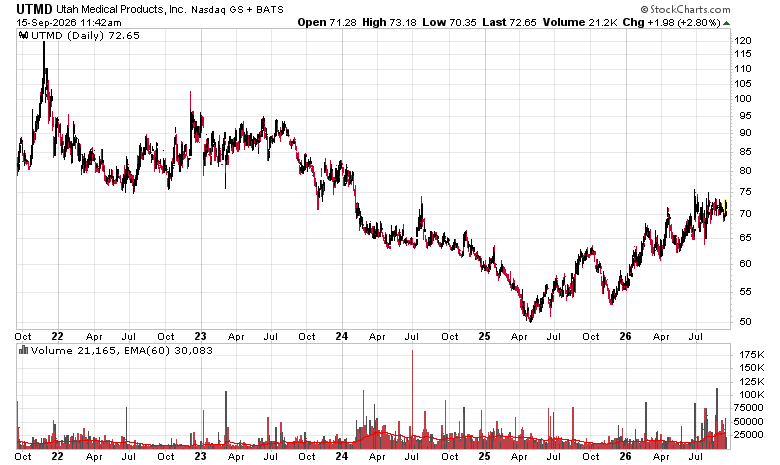
Utah Medical Products share buyback

Well, this is interesting. It also represents the largest buyback offer in its corporate history.

Utah Medical Products, Inc. (Nasdaq:UTMD) announces today that it intends to repurchase at a price of $75.00 per share up to 650,000 of its shares, if tendered and not withdrawn by stockholders on or before October 7, representing approximately 20% of its currently outstanding shares.

From their Q2-2026 filings, they have US$87.5 million cash on hand and 3.184 million shares outstanding. Reported net income for the first half of 2026 is $5.3 million; revenues are in decline. They announced on August 31, 2026 they purchased a 100% interest in a UK company distributing supplies for “harm reduction” for US$4.9 million equivalent, which will add US$6 million/year in revenues but also synergize distribution with another product line (the press release for this was quite silent on any income metrics).

The company is proposing a buyback of approximately 20% of its common shares for US$47.5 million, at US$75/share.

This is very out of character of management, which has tended to move glacially. They bought back US$20 million in stock in 2024 and $8.4 million in 2025, and about $0.2 million repurchased so far in 2026. Needless to say, this potential $47.5 million repurchase is a considerable deviation from their past trend.

I suspect management is receiving pressure from its institutional shareholders that they should be doing something with their cash stack (the company is considerably over-capitalized). Instead of issuing a US$15/share special dividend (which is what $47.5 million represents) they decide on a route that basically tells those shareholders “sell out or shut up”. It is also at a price that is quite tepid, which kind of describes this company as a whole.

My analysis of this firm from last year pretty much stands today. Something makes me think on the back of my mind that the crafty 79-year old CEO has a few more cards left to play beyond this buyback proposal.

The difficulty of making money in a rising rate environment

It is exceedingly difficult to make money in a rising interest rate environment. Capitalized values of assets descend when discount rates go higher. Since financing is typically secured on the basis of asset value, when asset values drop, the leverage must decline and all sorts of spinoff effects occur down the financial chain.

From a political perspective, the way to bridge this inconvenient fact is to shovel money out into the economy and bail out the whole financial system by inducing demand to keep the asset prices high through deficit spending.

This is why any governments linked to the global financial system will be in perpetual deficit financing mode – to do otherwise will invite an economic collapse of epic proportions. This would lead to political instability and for the USA, a significant loss of control over a dollar-denominated economy (which currently gives them huge economic advantages).

The classic economic calculation of GDP is the addition of consumption, investment, net exports and… government spending.

The US government currently has a 6% budget deficit to GDP. The Canadian government deficit, combined with provincial deficits, is around 3%. Other than the removal of the Covid-19 one-time spending where every world government was shovelling money out to the populace (the inflationary aftermath of which we are still dealing with today), government spending continues to increase. If in some dream scenario the government wanted to balance the budget and decided to do so by reducing spending instead of raising taxes, it would trigger an instant recession. The analogy is that the economy is hopelessly addicted to government spending – and a withdrawal would cause huge tremors like a physically addicted heroin addict getting off the needle. Other major national governments are in similar situations across the globe – arbitrarily, the top 10 are all in deficit; looking at the top 20, rank 20 Switzerland is the only one in relative balance.

With US 10-year treasuries an inch away from hitting the symbolic 5% yield to maturity mark, this is causing a crisis of sorts – the least of which is that the asset collateral represented by such bonds has dropped in value. With a higher long-term interest rate, the cost of borrowing for private entities also becomes equivalently expensive as corporate bonds are priced with a spread to the “risk-free” rate of the US Treasury bond.

In Canada, we are seeing the 5-year Government of Canada bond trading at 3.6%, which is the highest it has been since early 2024. This has a direct bearing on the real estate market and rising interest rates have treated this asset class like a campfire with a wet blanket on top.

When deficit spending becomes too expensive, another lever to be pulled is to induce inflationary panic. This has been going on for quite some time, but nothing does this better than triggering a war – and wars cost lots of money, which needs to be funded with additional deficit spending – almost as good as Covid spending. Adding “fuel to the fire” is having a core industrial input cost (the price of diesel) rise to a point that is going to raise prices in a manner that no carbon tax could ever.

Keep in mind that the real rate of interest is the nominal rate minus the expected rate of inflation.

Even if the markets, which are vomiting on government debt, are demanding higher rates of interest, you can still trigger a decrease in the real rate of interest.

It is by triggering the fear of massive amounts of inflation. Whether the inflation actually occurs or not is another matter – consumption and capital spending get pulled forward ahead of anticipated price increases, and that behaviour by itself shows up in GDP. What is being discounted is the nominal rate against expected inflation, not against the inflation that eventually prints.

This is not what the reported statistics are showing at present. Canadian CPI is running at 3%, but the Bank of Canada’s core measures (CPI-trim at 2.0% and CPI-median at 1.9%) are sitting roughly at the 2% target. That gap between headline and core is partly due to the energy pass-through. I would argue it is the perception of higher inflation, rather than the reported statistics, that is driving behaviour.

There is a fair objection to all of this. If governments wanted inflationary panic, why did Ottawa suspend the federal fuel excise tax in April, and then extend the suspension through January 2027 at a total cost of about $5 billion? The answer is that a tax expenditure is still spending. The 10 cents a litre on gasoline and 4 cents on diesel is borrowed money handed straight to consumers at the point of highest propensity to spend – it suppresses the measured number without touching the underlying deficit condition. The tax returns at half rate in February and in full in April, which means the headline CPI quoted above has a mechanical increase already scheduled into it.

All of these financial machinations will create an oscillatory market where you have competing notions of valuation – cash flowing assets will degrade as the capitalized value of said asset will decrease with higher discount rates; physical asset values will rise, and the price of consumption will skyrocket. This makes real estate, for example, difficult to model – on one hand, you have cash flows that can be generated through rents – the present value of these cash flows will decrease due to the increase in the discount rate; conversely the asset value will rise in nominal terms due to the inflation that higher interest rates are signalling. An investor in Canadian Apartment Properties REIT (TSX: CAR.un) is currently sitting on an asset with (June 30, 2026) NAV of $54.38 per unit, but the units are trading, as of this writing, 40% under this. On the commercial end, Allied Properties (TSX: AP.un) is in a fight for its life and is trading at about 50% of its stated NAV. High interest rates today are causing the devaluation of these trusts, but assuming they survive without another dilutive recapitalization, there will be a time where cash flows from said properties will once again enter into the valuation of the units – say if CAR.un traded at a valuation of a 12% yield on its annualized FFO instead of its current 7.7%, would that be a better alternative in an environment where 5-year GoC rates are 3.6%?

Stock markets measure profitability in nominal terms. The eroding value of currency should never be confused with the underlying profitability of companies producing things that are in demand with limited competition, or that are the first-hand recipients of the money created through deficit spending.

There is an element of “damned if you do and damned if you don’t”, referring to the fact that one seemingly cannot invest in equities at all-time highs, yet if you are sitting in cash you are seeing the purchasing power erode very quickly. Even the precious metal complex (gold, platinum and silver) is not immune – the ebbs and flows of demand for them (both in their industrial metals capacity and their monetary metals capacity) do not give any assurance that in the short term you are holding onto a “safe” asset. Gold posting three consecutive weekly declines into a $100 oil shock makes the point rather neatly: it was the real rate doing the work, not the inflation headline.

Inflation expectations and government spending are the trigger to rising interest rates and consequential declines in purchasing power; these deficits are now baked in and will be competing against private capital. These times are reminiscent of what occurred in the second half of the 1970’s, with the material difference that real rates then were deeply negative on measured inflation while today they are positive on measured inflation and arguably negative only on the perceived kind. If this playbook is an apt analogy, it will be difficult to get ahead, in real terms, in this financial environment.

Fortunately, I am not an institutional pension fund investor who has to realize a return on a hundred billion dollars of capital. The advantage of being a small-time investor is there will always be nooks and crannies to retreat into for those better-than-average risk-reward opportunities. However, a rising-rate environment makes them much more difficult to find.
Brookfield Office Properties preferred shares – Yield on cost

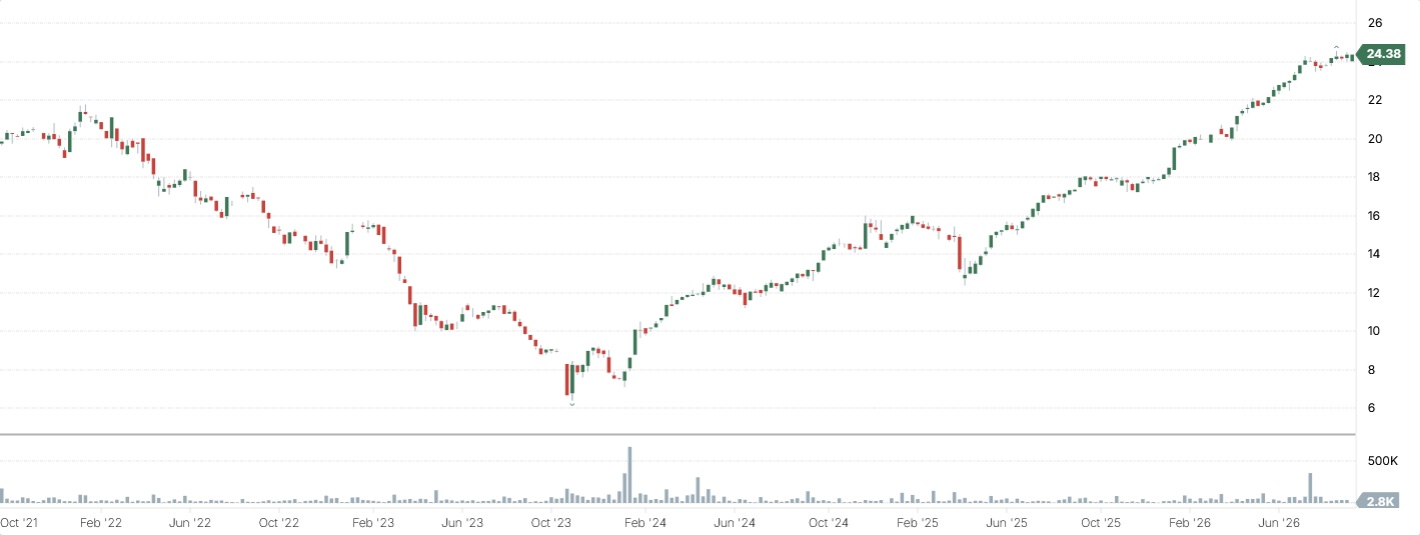
One of the entrails of the Brookfield Property Partners is the merging with and guarantee of the preferred share obligations of Brookfield Office Properties. They trade on the TSX as BPO.PR.x and you can view the salient terms and conditions of the various securities on Brookfield’s surprisingly well-organized website.

At the end of 2023 these were dumped by the market as the office property market had cratered due to Covid-19 lease expirations and also due to tax-loss selling. There is not much of an organic demand-side for these shares as there are no structural preferences for non-Canadian residents (Canadian residents receive an advantage of an eligible dividend payment in non-registered accounts). Also, the Brookfield Office Properties entity itself is only part of the Brookfield Property Partners entity (technically the LP) which itself is a subsidiary of Brookfield Corporation. When reading the 6-K and 20-F filings, it is an incredibly complex structure and I do not pretend to understand it comprehensively other than that there is a significant equity buffer for unitholders and the dividends are likely to be paid for years ahead, barring some calamity in the regions they operate in.

Specifically, the BPO.PR.R issue was at a 4.3% coupon, and its rate reset is 3.48% every five years, October 1, 2026 being the upcoming reset date. The last time it did a rate reset, five-year government bond yields were at near record lows.

I bought my shares at $7.60, which translated into a 14.1% yield. Now the shares have reset their yield to 6.829%, which is a 22.5% yield on cost. Yield on cost is a completely meaningless financial metric but in the era where you will be lucky to get (a fully taxable) 2.5% on a high interest savings account, this trade can be chalked up in the “win” category.

It creates quite an interesting dilemma on when these securities should be sold. Given the cash-heavy position in the portfolio, it would make no sense to liquidate this. The only instances where it would make sense is that if I had some inkling that the dividend was no longer going to be paid, if I suddenly found a use for the portfolio’s idle cash, or if I was betting on a significant rise in interest rates (I could attempt to convert the preferred shares into floating rate shares which is effectively a bet that the average 3-month treasury bond yield over the next five years will be about 1% higher than it is presently – I do not think this is a good bet). In the meantime, I clip these very boring coupons.

The shares are a small fraction of my overall portfolio. I do have thoughts if I would have taken a 20% position back then in these preferred shares (as I was still about 40% cash at the time in question). It would have been quite the tax-preferred income stream.

Especially after my Teekay Offshore experiences, I am very aware Brookfield is by no means a benevolent corporation. Like anything in the capital marketplace, I am not treating this as a permanent income stream.